SPECIALIST CONTACT LENSES
If you’ve been told in the past that you cannot wear contact lenses because of an irregular cornea or other problems, you may want to get a second opinion and ask your Optometrist at Mearns Opticians about our scleral contact lenses.
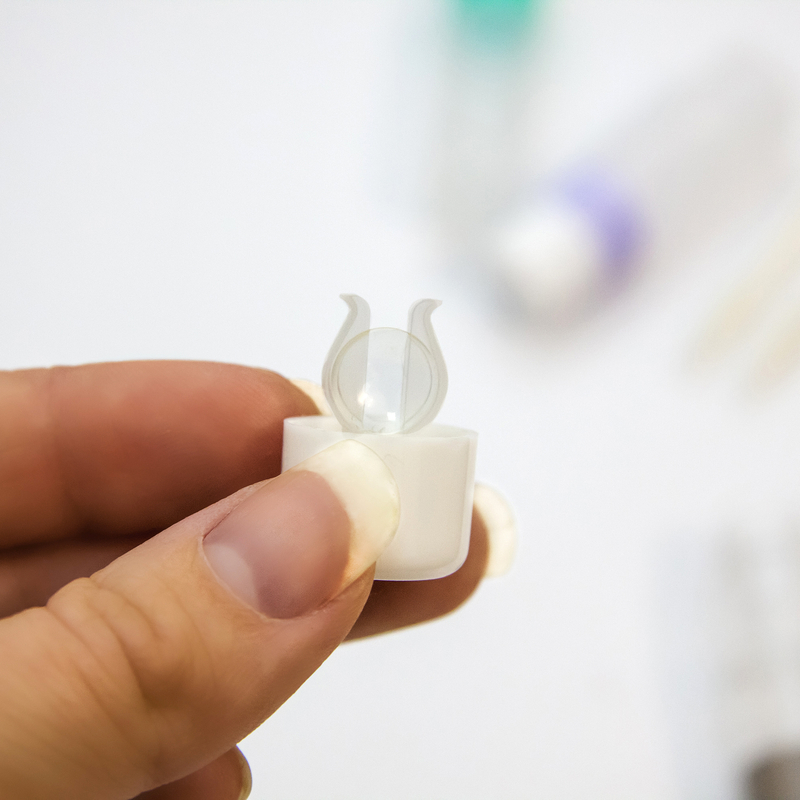
Scleral contacts are large-diameter gas permeable contact lenses specially designed to vault over the entire corneal surface and rest on the “white” of the eye (sclera). In doing so, scleral lenses functionally replace the irregular cornea with a perfectly smooth optical surface to correct vision problems caused by keratoconus and other corneal irregularities.
Also, the space between the cornea and the back surface of a scleral lens acts as a fluid reservoir to provide comfort for people with severe dry eyes who otherwise could not tolerate contact lens wear.
SCLERAL CONTACT LENSES
Scleral contacts are noticeably larger than rigid gas permeable (RGP) contacts and have a diameter equal to or greater than that of soft contact lenses. The smallest sclerals are approximately 14.5 mm in diameter, and the largest can be up to 24 mm.
Typically, lenses that are 18 mm or smaller are subcategorised as mini-sclerals
The average human cornea is approximately 11.8 millimetres in diameter, so even the smallest scleral contacts are designed to cover the entire corneal surface.
In comparison, most conventional RGP contact lenses are 9.0 to 9.5 mm in diameter and cover up to approximately 80% of the cornea.
CORNEO-SCLERAL CONTACT LENSES
Another category of gas permeable lenses bridges the size gap between conventional GP lenses and mini-sclerals. These lenses, called corneo-scleral lenses, generally are approximately 13 to 15 mm in diameter.
Corneo-scleral lenses often are a good choice for people who require larger-than-normal RGP lenses for greater comfort. They also are also used when contact lenses are needed after LASIK or other corneal refractive surgery to correct irregular astigmatism.
The size of lens used often is determined by the degree of complexity of the condition. Milder forms of keratoconus and irregular astigmatism from corneal grafts and refractive surgery often are easily managed with corneo-scleral lenses (CSLs)
Smaller scleral and mini-scleral contacts can be easier to apply, can be less costly and require fewer care products.
More complex conditions, including advanced keratoconus, pathologically dry eyes or severe ocular surface disease that might require a large tear reservoir, often are fitted with larger scleral lenses, as they have more capacity to hold fluid or bridge large changes in corneal curvature.
During your contact lens exam and fitting, your Optometrist will determine the best scleral lens type and size for your specific needs.
KERATOCONUS
Many keratoconic patients find that glasses do not provide good vision and that is where contact lenses come in as they can often provide excellent vision even where the cornea is irregular.
In cases of early keratoconus, a standard RGP lens may be used. However, if the lens does not centre properly on the eye or moves excessively with blinks and causes discomfort, switching to a large-diameter scleral contact lens may solve the problem.
Because scleral lenses are designed to vault the corneal surface and rest on the less sensitive surface of the sclera, these lenses often are more comfortable for a person with keratoconus.
Also, scleral lenses are designed to fit with little or no lens movement during blinks, making them more stable on the eye, compared with traditional corneal RGP lenses
Sometimes keratoconus progresses to such an extent that a corneal graft is required. Unfortunately specialised contact lenses are often still needed after the graft.
For a small proportion of LASER surgery patients a condition call post-LASIK ectasia occurs this is another form of keratoconus and requires contact lenses. Some LASER patients who suffer from glare post-surgery also benefit from contact lenses.
For patients who have any form of irregular cornea, we offer the latest lens designs that are often not available through the hospital eye service to provide good comfort and achieve best vision potential. We may even design a contact lens specifically for you.
CORNEAL TRANSPLANT AND DRY EYE PROBLEMS
In addition to keratoconus, scleral contact lenses can be used for eyes that have undergone a cornea transplant, and for people with severe dry eyes caused by conditions such as Sjogren’s syndrome
Advances in lens design technology are allowing manufacturers to design scleral lenses that can correct more conditions than ever before, including bifocal sclerals for the correction of presbyopia.
FITTING AND COST
Each corneal-scleral lens is custom fitted to each patient using advanced corneal topography imaging. This ensures maximum level of comfort and vision is achieved.
As this is a very bespoke service, a £75 fitting fee is applied. A monthly payment plan will be tailored to each patient to included replacement lenses every 6-12 months, cleaning solutions (optional) and all aftercare appointments




 Free Private Parking Available At Rear Of Property & On Street Parking For Disabled Badge Holders


